Hanging Kitchen Waste Bin: Will It Fit Your Cabinet Door?
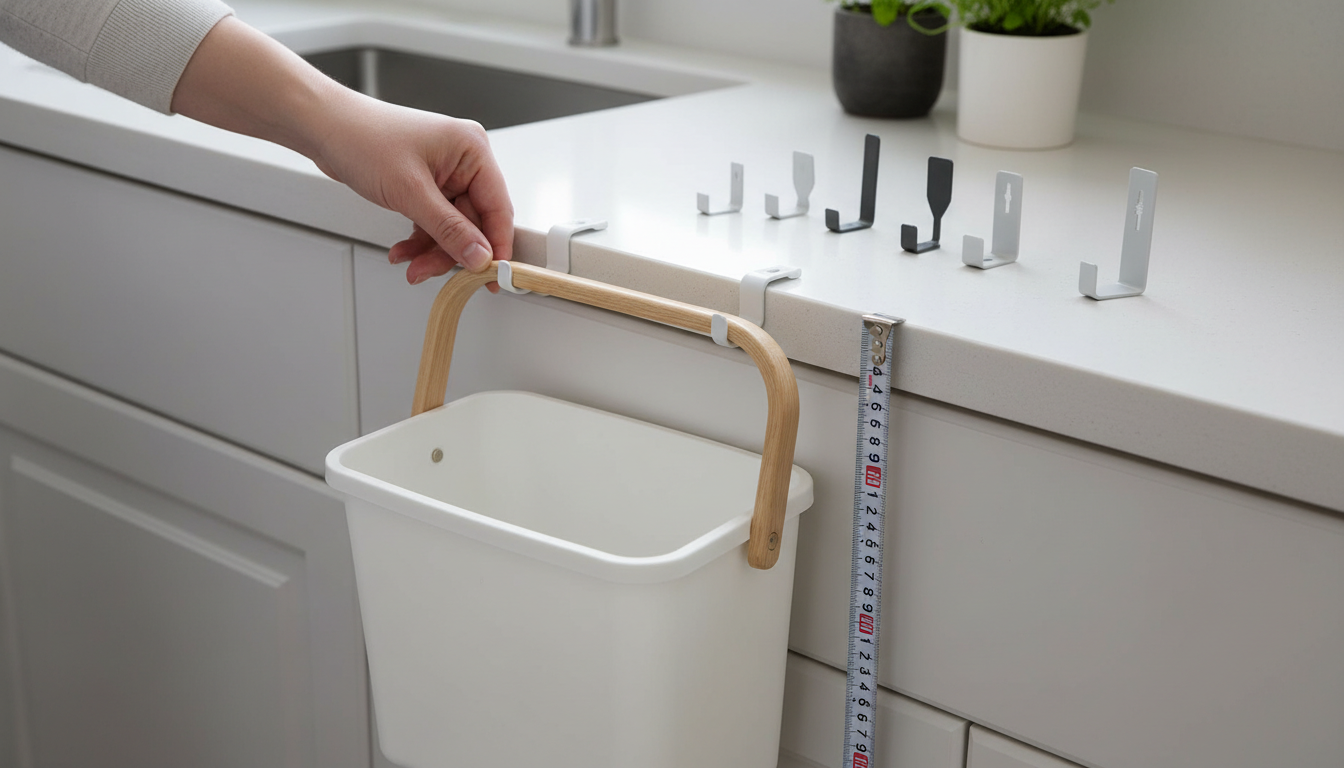
Will a Hanging Kitchen Waste Bin Fit on Most Cabinet Doors?
Most hanging kitchen waste bins are designed to fit a wide range of standard cabinet doors, but “most” depends on a few quick measurements: door thickness, the shape of the cabinet face (frameless vs. face-frame), and how much clearance you have between the door and any interior shelves or pull-out hardware. If your cabinet door falls within common thickness ranges and you have a little breathing room inside the cabinet, a hanging bin is usually an easy add-on.
What “Most Cabinet Doors” Typically Means
Many over-the-door hanging bins use a hook that slides over the top edge of the door. These hooks are commonly made to handle typical kitchen door thicknesses (often around 0.6–0.9 inches). If your door is unusually thick, has a decorative top edge, or uses a raised lip that prevents a flat hook from sitting flush, the bin may wobble or not seat properly.
Check These Three Fit Details Before You Buy
1) Door thickness: Measure the door’s thickness at the top edge where the hook will sit. If the hook is adjustable or includes spacers, you’ll have more flexibility.
2) Door-to-cabinet clearance: Close the door slowly after “dry fitting” a ruler or folded cardboard at the top edge to mimic the hook thickness. If the door rubs or won’t close fully, you’ll need a slimmer hook or a different mounting style.
3) Interior obstacles: Shelves, drawer slides, trash pull-outs, or stored items can interfere with the bin’s body once the door swings inward. Measure the available space inside the cabinet behind the door.
When a Hanging Bin Might Not Fit Well
Hanging bins can be tricky on doors with tight gaps, soft-close hinges with minimal clearance, inset cabinet doors, or cabinets where the top edge is blocked by a countertop overhang or a face-frame lip. In those cases, a stick-on mount, under-sink mount, or freestanding slim bin may work better.
For a deeper look at sizing, mounting styles, and practical setup tips, visit this guide to hanging kitchen waste bins.
FAQ
Do hanging kitchen waste bins scratch cabinet doors?
They can if the hook is bare metal or if grit gets trapped underneath. Choosing a bin with padded hooks (or adding felt pads) helps protect the finish and reduces shifting.










Leave a comment