Clean & Sterilize a Stainless Steel Baby Feeding Set
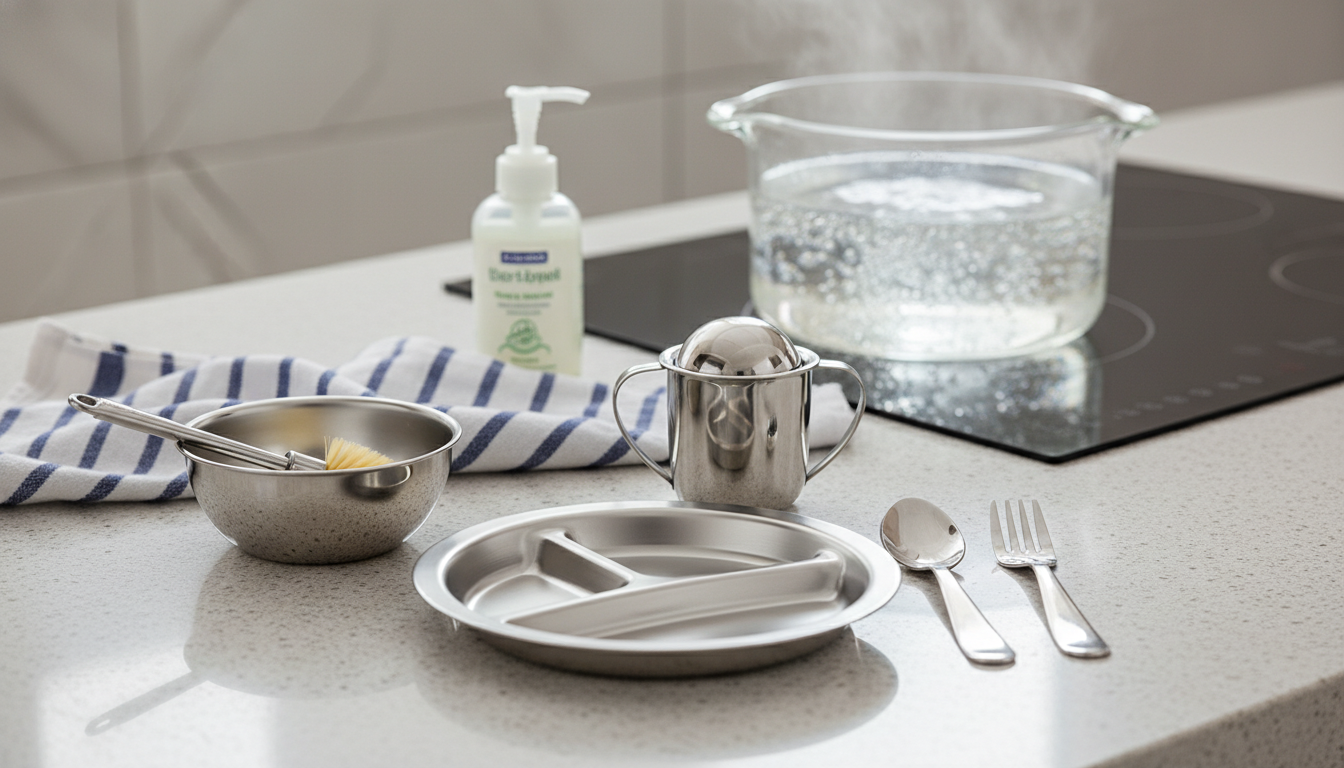
How do you clean and sterilize a stainless steel baby feeding set?
Stainless steel baby bowls, plates, cups, and utensils are durable and naturally non-porous, but they still need thorough cleaning and periodic sterilizing—especially for younger babies or after illness. The safest approach is a simple routine: wash well first, then sterilize with heat.
Step 1: Rinse and disassemble
As soon as possible after feeding, rinse pieces under warm water to prevent milk, puree, or oils from drying on. If your set includes silicone sleeves, lids, suction bases, or gaskets, separate them so hidden seams don’t trap residue.
Step 2: Wash with hot, soapy water
Use a mild, fragrance-free dish soap and a soft sponge or bottle brush. Clean seams, handles, and the underside of plates and suction bases. Avoid steel wool or abrasive powders that can scratch the surface and make future cleanup harder. Rinse until water sheets cleanly off the metal with no slick feel.
Step 3: Remove stains or rainbow discoloration (optional)
For stubborn film or “rainbow” heat marks, make a quick paste of baking soda and water, rub gently, then rinse. For mineral spots from hard water, wipe with a little distilled white vinegar, rinse, and dry. Don’t leave acidic liquids sitting on the metal for long periods.
Step 4: Sterilize with heat
After washing, sterilize using one of these methods:
- Boiling: Place stainless pieces in boiling water for about 5 minutes. Ensure items are fully submerged and not resting directly on the pot’s bottom if it could rattle or scratch.
- Steam sterilizer: Use an electric or microwave steam sterilizer if the manufacturer allows it. Arrange parts so steam can reach all surfaces.
- Dishwasher sanitize cycle: If dishwasher-safe, run on the sanitize setting and let pieces dry completely.
Step 5: Dry and store safely
Air-dry on a clean rack or use a dedicated towel. Store in a clean, dry cabinet—avoid stacking damp items, which can trap moisture and odors.
For a more detailed walkthrough and care tips by component, visit the full guide on cleaning and sterilizing a stainless steel baby feeding set.
FAQ
Can stainless steel baby utensils go in the dishwasher?
Most stainless steel baby utensils are dishwasher-safe, but check the product instructions first. Use the top rack when possible and choose the sanitize or hot-dry option only if any attached materials (like silicone) are rated for it.










Leave a comment