Seal Outdoor Sectional Storage: Stop Rain & Mildew
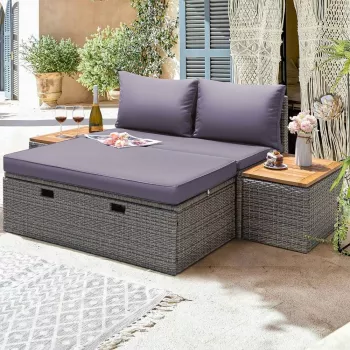
How do I waterproof and protect the storage compartment in an outdoor sectional sofa?
Outdoor sectional storage is convenient, but it can become a magnet for moisture, mildew, and rust if it isn’t sealed and maintained. The goal is to block water intrusion, manage condensation, and protect anything stored inside—without trapping humidity.
Start by inspecting the compartment and lid fit
Open the storage area and check for gaps around the lid, warped panels, cracked corners, or missing hardware. Even small misalignment can funnel rain into the compartment. Tighten screws, replace damaged hinges, and make sure the lid closes evenly before adding any waterproofing materials.
Add a weather seal where water sneaks in
Apply outdoor-rated adhesive foam weatherstripping or rubber gasket tape along the underside of the lid and contact points. Choose a thickness that compresses when closed, creating a continuous seal. This is often the single biggest improvement for keeping rain out.
Use a liner to create a second barrier
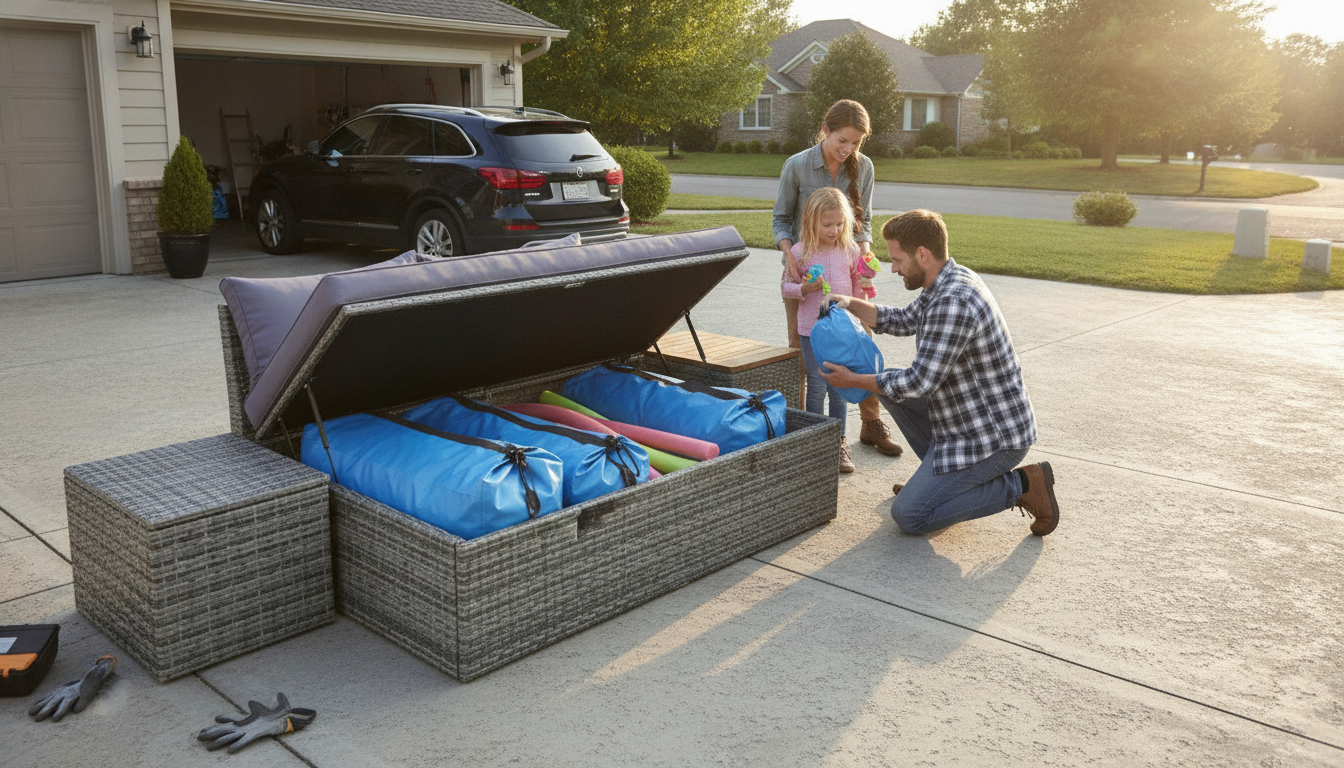
For compartments that aren’t perfectly watertight, line the interior with a removable waterproof storage bag or heavy-duty plastic bin with a lid. This protects cushions, throws, or patio accessories even if a little water makes it past the outer seal. Avoid thin trash bags—they tear easily and can trap moisture against the base.
Control moisture from condensation
Even sealed compartments can develop condensation. Add moisture absorbers (silica gel packs or hanging desiccant) and swap them regularly. If the design allows, add discreet ventilation—small vents or a slightly propped lid on dry days—to prevent musty odors and mildew growth.
Protect the materials from wear, mold, and rust
Wipe the compartment dry after storms and clean periodically with mild soap and water. If the frame is metal, treat exposed areas with a rust-inhibiting spray. For resin or wicker bases, use a UV protectant to reduce cracking and warping that can open new leak paths.
For a deeper, step-by-step breakdown of sealing options and product types to look for, visit the main guide here.
FAQ
Should I store cushions in the sectional’s storage box year-round?
It’s fine in dry seasons if the compartment is well-sealed and you use a waterproof liner, but for long stretches of wet weather, a dedicated cushion storage deck box or indoor storage reduces mildew risk.









Leave a comment