Simple Daily Puppy Training Schedule New Owners Can Follow
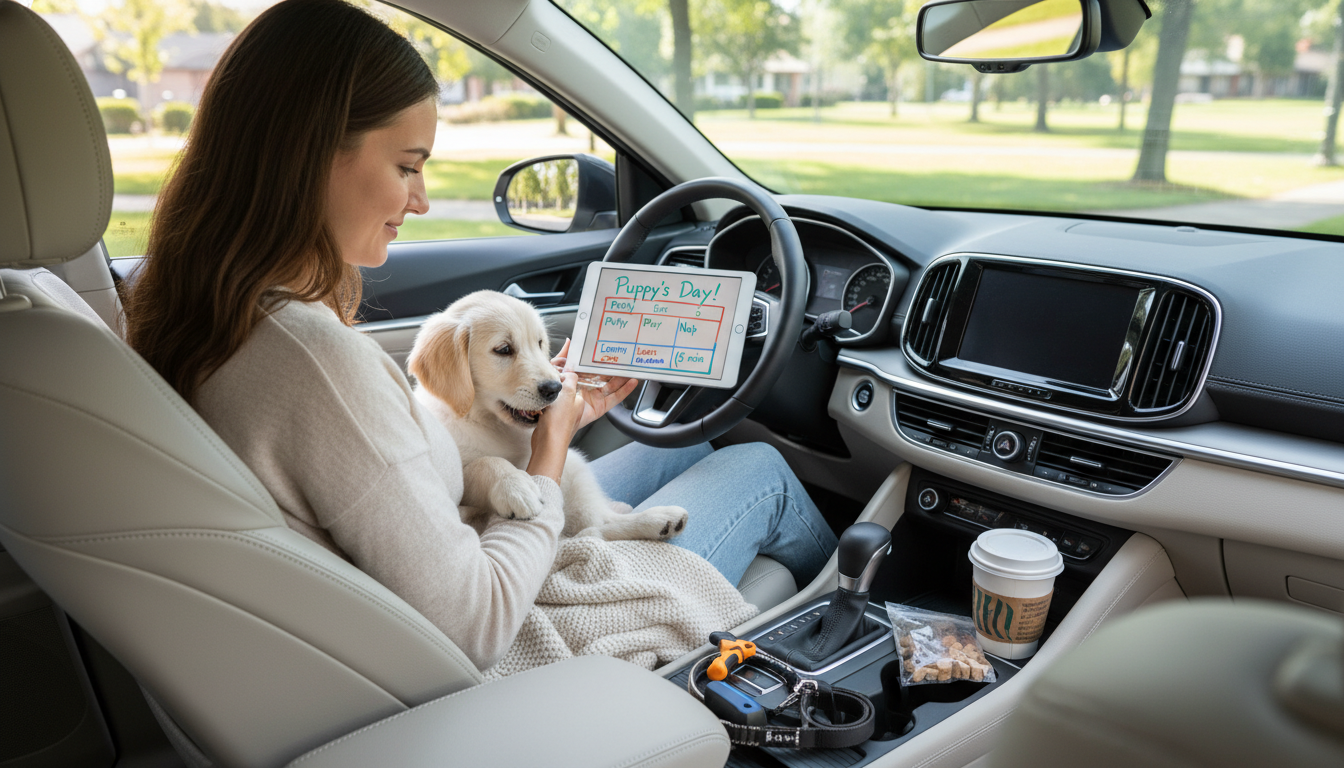
How do I create a simple daily puppy training schedule that new owners can stick to?
A schedule only works if it fits real life. Keep sessions short, repeatable, and tied to things that already happen every day (waking up, meals, potty breaks, and bedtime). Aim for consistency over intensity: several 1–5 minute lessons beat one long training block.
Start with three daily “anchors”
Build your day around: (1) potty breaks, (2) meals, and (3) sleep/quiet time. Puppies learn fastest when training is attached to these predictable moments. Each anchor gets one tiny training goal, plus rewards for calm behavior.
A simple, stick-with-it daily schedule (example)
Morning (wake-up): Potty immediately, then 2 minutes of “sit” and “name game.” Breakfast in a crate or playpen to practice calm eating and prevent wandering accidents.
Mid-morning: Potty, then 3 minutes of leash practice in the yard or hallway (follow-me, stopping when you stop). Short play session, then a nap/quiet crate time.
Lunch/early afternoon: Potty, lunch (or training treats if your vet recommends 3 meals), then 2 minutes of “down” or “touch.” Provide a chew toy during quiet time to reinforce settling.
Late afternoon: Potty, then 3–5 minutes of handling practice (paws, ears, collar grabs) with treats. Add a brief “drop it” trade game using a toy.
Evening (before/after dinner): Potty, dinner, then 2 minutes of “leave it” or “stay” at a very easy level. Calm play, then another nap.
Bedtime: Final potty, 1 minute of calm “go to bed” routine, then lights out.
Keep it simple: one skill per session
Pick one cue per mini-session (sit, down, come, leave it). End on a win, reward immediately, and stop before your puppy gets tired or silly.
Make it realistic for new owners
If you miss a session, don’t “make up” time later. Just return to the next anchor point. For a more detailed, printable approach, visit the full puppy training schedule guide.
FAQ
How long should each puppy training session be?
Most puppies do best with 1–5 minute sessions, repeated several times a day. Stop while your puppy is still engaged so training stays fun and effective.









Leave a comment