Garden Parasol Sizes Explained: 5–13+ ft Options
What sizes do garden parasols come in?
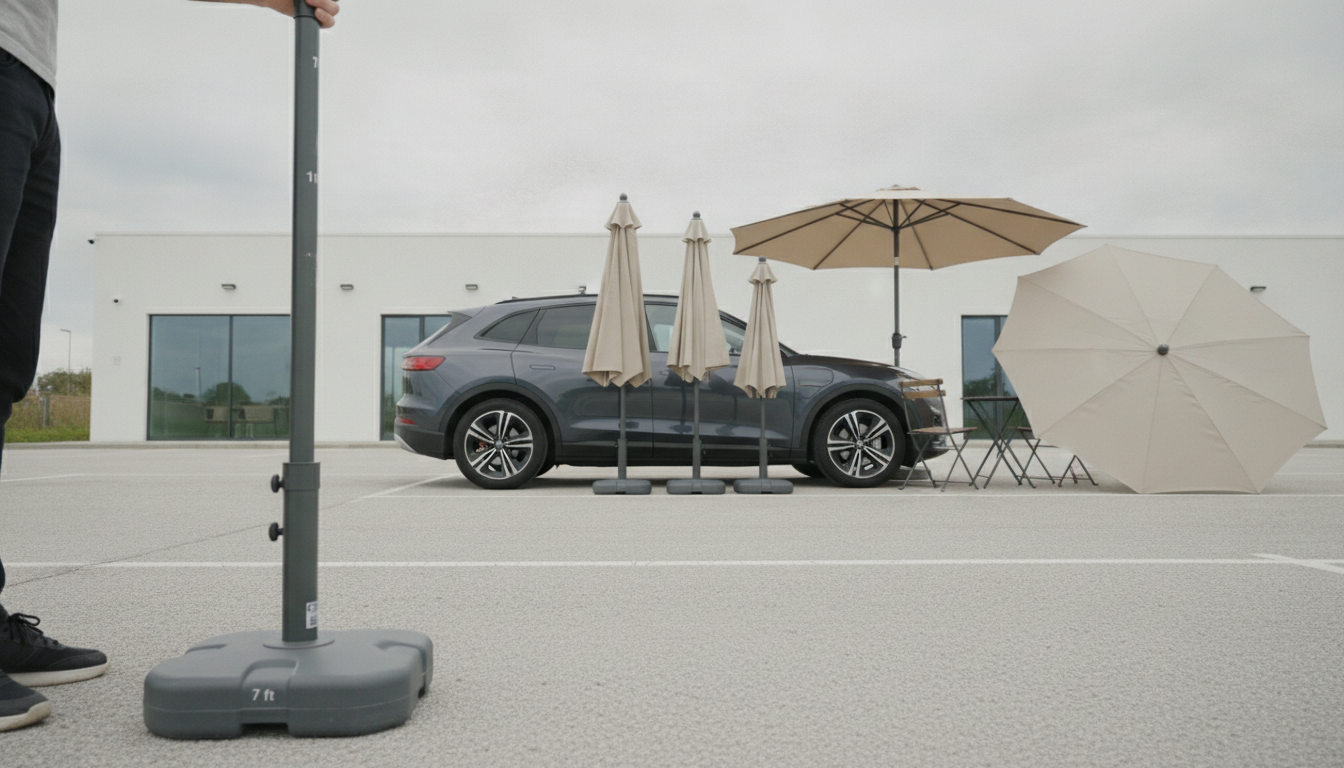
Garden parasols come in a wide range of canopy sizes, from compact models made for a small café table to oversized options designed to shade a full outdoor seating area. Most are measured by canopy diameter (round) or by width and depth (square/rectangular). Choosing the right size is mainly about how much shade you need, how much space you have, and how stable the umbrella will be in your local conditions.
Common small sizes (about 5–7 ft)
Smaller parasols are typically around 5 to 7 feet across. These are a good fit for balconies, bistro sets, or tight patios where you want shade for one or two chairs without the canopy overhanging walkways. They’re also easier to store and often pair well with lighter bases, though wind can still be an issue.
Most popular medium sizes (about 7.5–9 ft)
The most widely used garden parasols tend to fall in the 7.5 to 9 foot range. A round 9-foot canopy commonly covers a 4-seat table or a small lounge arrangement, especially when the sun is high. If you want flexible shade for everyday dining and casual seating, this size band is often the simplest starting point.
Large sizes for bigger patios (about 10–13+ ft)
Larger parasols generally start around 10 feet and can extend to 13 feet or more. These can shade larger dining tables, sectional seating, or conversation sets. As size increases, so do the demands for stability—expect to need a heavier base, a sturdier pole, and stronger ribs to keep the canopy secure.
Square and rectangular size options
Square parasols are often sold in sizes like 6.5 ft, 8 ft, 9 ft, or 10 ft square. Rectangular versions are popular for long tables and can run roughly 6×10 ft, 8×11 ft, or similar dimensions. These shapes can provide more “usable” shade over furniture layouts where a round canopy leaves corners exposed.
For a deeper breakdown of sizing, shapes, and what fits different patio setups, visit https://reliablepickspulse.shop/what-sizes-do-garden-parasols-come-in/.
FAQ
How do I choose the right patio umbrella base weight?
Match the base to the canopy size and pole style: larger canopies and offset (cantilever) designs need heavier bases. As a rule, step up in weight if your patio is windy or if the umbrella will be left open for long stretches.








Leave a comment