5 D’s of Dog Training: Distance, Duration, Distraction
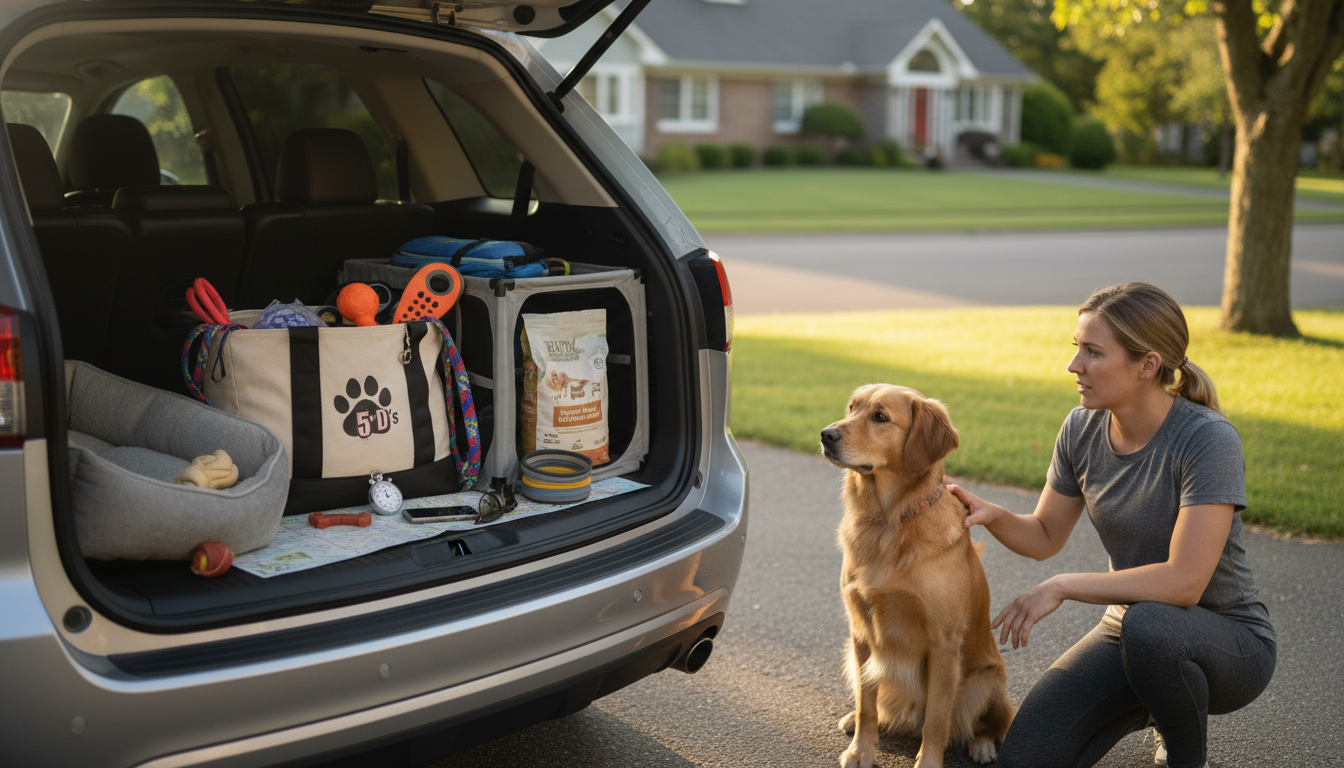
What are the 5 D’s of dog training?
The “5 D’s” are a simple, memorable way to handle most everyday training moments: Distance, Duration, Distraction, Direction, and Disengagement. They help shape reliable behavior by adjusting the challenge level and teaching your dog how to succeed in real-world situations.
1) Distance
Distance is how far you are from your dog (or how far your dog is from a trigger). Increasing distance can make cues easier—like practicing “come” from just a few feet before trying it across the yard. Decreasing distance raises the difficulty.
2) Duration
Duration is how long your dog can hold a behavior. A one-second “stay” is different from a one-minute “stay” while you open the door. Build duration slowly so your dog learns that calm, steady behavior pays off.
3) Distraction
Distraction is anything competing for your dog’s attention: smells, people, dogs, toys, or movement. Start training in low-distraction areas and gradually work up to busier environments. If your dog struggles, reduce the distraction level to get quick wins again.
4) Direction
Direction is where your dog is positioned and where you want them to move—toward you, beside you, onto a mat, or away from something. Clear directional cues (like “heel,” “place,” “touch,” or “leave it”) give your dog a job and reduce confusion.
5) Disengagement
Disengagement is your dog’s ability to break focus from a tempting or exciting trigger and reorient to you. This is the foundation for polite leash walking, calm greetings, and impulse control. Reward check-ins, eye contact, and choosing you over the environment.
For more detail on how to apply each D in real training scenarios, visit the main guide: https://reliablepickspulse.shop/what-are-the-d-s-of-dog-training/.
FAQ
How do I use the 5 D’s to fix leash pulling?
Increase distance from distractions, reward short duration of loose leash, and practice with low distractions first. Add direction (change directions or use “heel”) and reinforce disengagement when your dog looks back at you instead of pulling forward.









Leave a comment